You Won’t Believe These Cultural Gems Hiding in Córdoba
Córdoba, Spain, is more than just a postcard-perfect city—it’s a living museum where every alley whispers history. I was blown away by how much culture fits into such a compact space. From the awe-inspiring Mezquita to hidden courtyards blooming with jasmine, the city offers unforgettable experiences. If you're planning a trip, let me show you the real gems most tourists miss—authentic, breathtaking, and deeply rooted in tradition. This is not a city to rush through. It’s one to savor, to wander slowly, to listen to. Every stone, every archway, every flower petal tells a story of coexistence, resilience, and beauty. Whether you're drawn to architecture, music, or quiet moments in sun-dappled plazas, Córdoba delivers with grace and depth. Let’s uncover what makes this Andalusian treasure truly special.
The Heart of Córdoba: The Mezquita-Cathedral Experience
The Mezquita-Cathedral stands as one of the most extraordinary religious structures in the world, a symbol of cultural layering and spiritual dialogue across centuries. Originally constructed as a mosque in the 8th century during Islamic rule, it was later consecrated as a Catholic cathedral after the Christian reconquest in the 13th century. What makes this site so remarkable is not just its scale or beauty, but the way two distinct faiths have left enduring marks on a single sacred space. Walking beneath the forest of red-and-white striped arches, supported by ancient Roman columns, one feels the weight of time and the harmony of contrasting traditions. The cathedral’s Renaissance nave rises at the center like a quiet declaration, not of conquest, but of coexistence.
Visiting early in the morning is one of the most effective ways to deepen your experience. By arriving at opening time, usually around 10 a.m., you avoid the midday crowds and the harshest sunlight filtering through the high windows. The soft morning light enhances the golden hues of the stucco and the intricate calligraphy carved into the mihrab, the prayer niche that once directed worshippers toward Mecca. Few visitors take the time to examine the small details—the Kufic inscriptions, the geometric mosaics, or the way the columns were repurposed from Roman and Visigothic ruins. These subtle elements speak volumes about Córdoba’s historical role as a center of learning, tolerance, and artistic innovation during the height of Al-Andalus.
The cultural significance of the Mezquita extends beyond architecture. For centuries, it served as a spiritual heart for Muslims in the Iberian Peninsula, and later, for Christians. Its dual identity reflects the complex narrative of Spain’s past—a history shaped by Muslim, Christian, and Jewish communities living side by side, sometimes in conflict, often in collaboration. Understanding this context enriches the visit, transforming it from a mere sightseeing stop into a moment of reflection. Audio guides are available in multiple languages and provide valuable historical context, though hiring a certified local guide can offer deeper insights into the building’s layered symbolism and construction techniques.
To appreciate the Mezquita fully, consider visiting twice—once during daylight hours to absorb the details, and again in the evening for the illuminated tour. As the sun sets, the site is softly lit, casting dramatic shadows and highlighting the rhythmic repetition of arches. This quieter, more contemplative experience allows visitors to feel the spiritual atmosphere that has drawn people to this place for over 1,200 years. Whether you are religious or not, the Mezquita invites reverence through its sheer artistry and historical resonance.
Hidden Patios: The Soul of Local Tradition
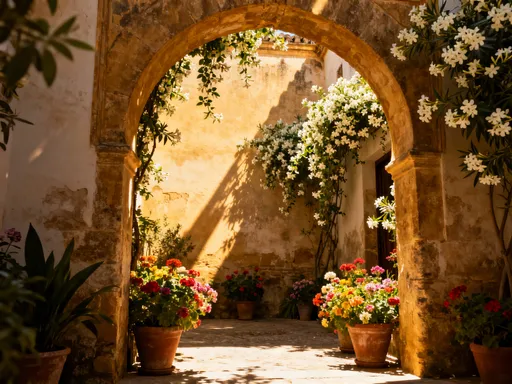
Among Córdoba’s most enchanting traditions is the celebration of the Patios de Córdoba, a festival of flower-filled courtyards that transforms private homes into public art displays each spring. Recognized by UNESCO as an Intangible Cultural Heritage of Humanity in 2012, this custom dates back centuries and reflects the Andalusian love for nature, beauty, and community. During the annual competition in May, residents open their inner patios to the public, showcasing vibrant arrangements of geraniums, bougainvillea, jasmine, and citrus trees arranged in symmetrical pots and cascading from wrought-iron balconies. The air fills with the scent of blossoms, and the sound of water trickling from small fountains adds to the serenity.
While the festival is the most famous time to see the patios, many can be enjoyed year-round through designated cultural routes or guided tours. The city maintains a network of permanent patio visits in neighborhoods like Santa Marina, San Basilio, and San Lorenzo, where homeowners continue to preserve this tradition even outside the official season. These visits offer a rare glimpse into private domestic life, where generations have passed down the art of patio gardening. The layout typically follows a central courtyard with a fountain, surrounded by tiled walls and climbing plants, designed to provide shade and coolness in the hot Andalusian climate—a practical solution turned into an aesthetic masterpiece.
For travelers seeking authenticity, the key is to explore beyond the main tourist paths. Smaller side streets often reveal quieter, more intimate patios that are less staged and more reflective of daily life. Local guides can help identify which homes participate in the year-round program and share stories about the families who maintain them. Respectful behavior is essential—visitors should avoid touching plants, blocking pathways, or using flash photography, which can be disruptive. The best times to visit are weekday mornings, when crowds are thinner and natural light enhances the colors of the flowers.
The patio tradition is more than decoration; it is a living expression of identity, pride, and environmental adaptation. In a city where summers can exceed 40°C (104°F), these green oases serve both functional and emotional purposes. They represent a deep connection to the land, a commitment to beauty in everyday life, and a spirit of openness—inviting strangers into one’s home to share a moment of peace. Experiencing a patio, whether during the festival or off-season, is to witness a quiet act of cultural preservation that continues to thrive.
Alcázar of the Christian Monarchs: A Fortress of Stories
Nestled along the banks of the Guadalquivir River, the Alcázar of the Christian Monarchs is a medieval fortress-palace that served as a residence, military stronghold, and royal court during pivotal moments in Spanish history. Originally built by the Romans and later expanded by Muslim rulers, the site was reconstructed in the 14th century under King Alfonso XI. Its name commemorates Ferdinand and Isabella, who used it as a base during the final stages of the Reconquista—the centuries-long campaign to reclaim Muslim-held territories. Today, the Alcázar welcomes visitors with its symmetrical gardens, reflecting pools, and imposing stone walls, offering a blend of military history and tranquil beauty.
The gardens are among the most striking features, designed in the Islamic tradition of paradise gardens, where water symbolizes life and purity. Cypress trees, some over 700 years old, stand like sentinels along the pathways, their tall, slender forms adding vertical elegance to the landscape. Orange and myrtle trees line the walkways, and the sound of water flowing through stone channels creates a soothing backdrop. The central pool, framed by marble columns and ornate tilework, reflects the sky and surrounding greenery, enhancing the sense of calm. This deliberate use of water and geometry reflects the sophisticated understanding of environmental design in Andalusian culture.
History enthusiasts will appreciate the site’s multifaceted past. After the Reconquista, the Alcázar became a prison and interrogation center during the Spanish Inquisition, adding a somber layer to its legacy. Remnants of dungeons and iron gates remain visible, serving as quiet reminders of a more turbulent era. Yet, the site does not dwell on darkness; instead, it balances historical truth with beauty, allowing visitors to reflect on both triumph and suffering. Informational plaques provide context in Spanish and English, and guided tours are available for those seeking a deeper understanding of its political and military significance.
Due to Córdoba’s intense summer heat, the best time to visit the Alcázar is either in the early morning or late afternoon, when temperatures are more comfortable and sunlight filters gently through the trees. Midday visits can be overwhelming without shade, though the central garden offers some relief. Wearing a hat and carrying water is advisable. Even in winter, the site retains its charm, with softer light and fewer visitors allowing for a more personal experience. Whether drawn by history, horticulture, or photography, the Alcázar offers a rich, layered encounter with Spain’s complex past.
Judería: Getting Lost in the Old Jewish Quarter
The Judería, or historic Jewish Quarter, is the heart of Córdoba’s old town, a labyrinth of narrow cobblestone streets, whitewashed walls, and fragrant orange trees. Once home to a thriving Jewish community during the medieval period, this neighborhood preserves the architectural and cultural essence of Al-Andalus. Though the Jewish population was expelled in 1492 during the Spanish Inquisition, the area remains a testament to their contributions to Córdoba’s intellectual and spiritual life. Walking through the Judería today feels like stepping into a timeless world, where every turn reveals a new courtyard, a hidden arch, or a glimpse of the Mezquita’s bell tower rising above the rooftops.
One of the most iconic spots in the Judería is the Calleja de las Flores, a narrow alley famous for its flowers spilling from window boxes and the view of the Mezquita at the end. While it draws many photographers, arriving early ensures a quieter moment to appreciate its charm. Beyond the postcard views, the neighborhood is filled with artisan shops selling handmade fans, leather goods, and traditional ceramics. These crafts are not mass-produced souvenirs but reflections of local skill passed down through generations. Supporting these small businesses helps sustain the cultural economy and preserves traditional techniques that might otherwise fade.
Navigating the Judería is best done without a strict itinerary. The joy lies in getting slightly lost, discovering a quiet plaza shaded by a fig tree, or stumbling upon a small family-run bakery offering fresh churros with thick hot chocolate. Locals move at a relaxed pace, pausing to chat in doorways or sip coffee at outdoor tables. Slowing down allows visitors to absorb the rhythm of daily life and appreciate the subtle details—the ironwork on a gate, the pattern of tiles around a doorway, the sound of a guitar drifting from an open window. These sensory experiences form the true essence of the neighborhood.
For those interested in deeper historical context, the Sefardic Museum, located within the former synagogue, offers insight into the Jewish heritage of Córdoba. Though small, the museum presents artifacts, documents, and explanations about the community’s golden age and eventual dispersal. The building itself, dating to the 14th century, is one of the few remaining medieval synagogues in Spain and is notable for its Mudejar-style architecture. Visiting this site fosters a greater appreciation for the diversity that once defined the city and underscores the importance of remembering all chapters of its past.
Cultural Museums Beyond the Mainstream
While the Mezquita and Alcázar draw the largest crowds, Córdoba’s lesser-known museums offer equally rewarding insights into its artistic and everyday life. The Museo de Bellas Artes, housed in a former hospital building near the river, is Andalusia’s second-largest fine arts museum. Its collection spans from the 14th to the 20th century, featuring works by local masters such as Juan de Valdés Leal and Antonio del Castillo. Religious paintings, still lifes, and portraits reflect the city’s spiritual and social history, while temporary exhibitions often highlight contemporary Andalusian artists, bridging past and present.
Equally compelling is the Ethnographic Museum, located in a restored 18th-century palace. This museum focuses on the material culture of Córdoba, displaying traditional tools, clothing, and household items that illustrate rural and urban life in the region. Exhibits on olive oil production, pottery, and weaving demonstrate the craftsmanship that has long sustained local communities. One section recreates a traditional Andalusian kitchen, complete with copper pots, clay jars, and a wood-fired oven, offering a tactile connection to the past. These objects, though simple, speak to resilience, ingenuity, and the dignity of everyday labor.
Another hidden gem is the Archaeological and Ethnological Museum, which traces Córdoba’s evolution from pre-Roman times through the Roman, Islamic, and Christian periods. Its collection includes mosaics, inscriptions, and everyday artifacts that reveal how people lived, traded, and worshipped across the centuries. A reconstructed Roman villa room, with its intricate floor mosaic, is particularly impressive. These museums may not have the fame of larger institutions, but they provide context that enriches the entire visit. They answer questions about who built the monuments, how people cooked, dressed, and celebrated—and why these traditions endure.
Practical considerations enhance the museum experience. Most open from 9 a.m. to 8 p.m. in summer and 9 a.m. to 7 p.m. in winter, with free admission on weekends for EU residents. Entry fees for non-residents are modest, typically between 1.50 and 3 euros. Audio guides or brochures in English are usually available. To avoid crowds, visit mid-week or in the late afternoon. Spending even an hour in one of these museums can deepen your understanding of Córdoba far beyond its iconic landmarks, revealing the human stories behind the stone and tile.
Flamenco and Live Cultural Performances
No visit to Andalusia is complete without experiencing flamenco, the soulful art form born from the fusion of Romani, Moorish, Jewish, and Spanish traditions. In Córdoba, flamenco is not a staged spectacle for tourists but a living, breathing expression of emotion and identity. Intimate venues known as peñas flamencas host regular performances, often in small courtyards or historic buildings where the acoustics amplify every footstep, handclap, and cry of “¡Olé!” These gatherings are attended by locals as much as visitors, creating an atmosphere of authenticity and respect.
Finding a genuine show requires some research. The best performances occur in places like Tablao Flamenco El Cardenal or smaller cultural associations that prioritize artistic integrity over commercial appeal. These venues typically offer one or two shows per night, lasting about an hour, with a small ensemble of guitarist, singer, and dancer. The intimacy of the space allows for a powerful emotional connection—you can see the sweat on a dancer’s brow, hear the tremor in a singer’s voice, feel the vibration of the guitar through the floor. This closeness is what makes flamenco so moving; it is not entertainment, but testimony.
Understanding the structure of a flamenco performance enhances appreciation. A typical show includes several *palos* (styles), each with its own rhythm, mood, and lyrical theme. *Soleá*, for example, is slow and profound, often expressing sorrow or longing, while *alegrías* is lively and joyful, reflecting celebration. The dancer’s movements—precise footwork, dramatic arm gestures, intense facial expressions—are not merely choreographed but improvised in response to the music. Silence between pieces is sacred; applause comes naturally, never forced. Visitors are encouraged to listen deeply, observe respectfully, and refrain from talking or using phones during the performance.
For those who wish to go deeper, some venues offer short workshops or pre-show talks explaining the history and techniques of flamenco. These sessions provide context and help visitors recognize the skill involved. Even if you don’t understand the lyrics, the emotion transcends language. Flamenco in Córdoba is not a relic of the past but a vibrant, evolving art form that continues to inspire new generations. Attending a performance is not just cultural sightseeing—it is bearing witness to a legacy of passion, resilience, and artistic truth.
Seasonal Events That Bring Culture to Life
Córdoba’s cultural calendar is rich with festivals that transform the city into a living stage of music, color, and community. One of the most beloved is the Fiesta de los Patios, held annually in May, when the entire city becomes a floral exhibition. Homes across the Judería open their courtyards, and judging panels award prizes for the most beautiful and traditional displays. The streets fill with music, food stalls, and families strolling from patio to patio. This event draws thousands, but it remains deeply rooted in local pride rather than commercialism. Participating households invest months in preparation, pruning, painting, and arranging—each patio a labor of love.
Another highlight is the Cruz de Mayo (Cross of May) festival, which takes place in early May. Elaborate flower-covered crosses are erected in plazas and patios, often accompanied by live music, dancing, and traditional costumes. Neighborhoods compete to create the most impressive cross, and the atmosphere is festive yet reverent. These celebrations blend religious devotion with seasonal joy, marking the arrival of spring with beauty and community spirit. For visitors, they offer a rare chance to see Córdoba not as a museum, but as a living, breathing city where tradition is practiced, not just preserved.
Other notable events include the Festival de Mayo, a month-long program of concerts, theater, and dance performances held in historic venues, and the Noche Blanca del Patrimonio, when museums, churches, and monuments stay open late with special activities. These nighttime events allow visitors to experience the city under soft lighting, with fewer crowds and a more magical ambiance. Even outside peak season, Córdoba offers cultural richness—autumn brings wine harvest festivals, winter features traditional Christmas markets, and spring and fall provide ideal weather for exploring.
For travelers seeking quieter experiences, visiting just before or after major festivals offers the best of both worlds—access to cultural events without the peak crowds. Off-season visits, particularly in November or February, reveal a more intimate side of the city, where interactions with locals are easier and the pace is gentler. Whether you come for the blooms, the music, or the history, timing your trip to align with Córdoba’s rhythm allows for a deeper, more meaningful connection to its soul.
Final Thoughts: Traveling with Cultural Respect and Curiosity
Exploring Córdoba is more than checking landmarks off a list—it is an invitation to engage with a city that has preserved its identity through centuries of change. Each monument, patio, and performance carries the imprint of those who came before, reminding us that culture is not static, but lived. To travel here with respect means listening more than speaking, observing before photographing, and understanding that traditions are not performances but ways of life. It means supporting local artisans, attending authentic events, and moving through historic spaces with care.
Curiosity is the best companion. Ask questions, learn a few words of Spanish, try the local dishes like salmorejo or flamenquín with genuine interest. Let the city unfold at its own pace. The beauty of Córdoba lies not only in its grand architecture but in the quiet moments—a woman watering her flowers at dawn, an old man playing chess in a shaded plaza, the echo of a guitar from an open window. These are the real gems.
As you plan your journey, remember that meaningful travel is not measured by how many places you see, but by how deeply you connect. Córdoba rewards those who come not as passive observers, but as respectful guests. Let its stories become part of your own, and carry forward the values of tolerance, beauty, and shared humanity that this remarkable city so beautifully embodies.